I have a small, heavy brass paperweight on my desk. It is a simple sphere with one flat side. I notice the way it catches the light every morning, a soft gradient that tells me exactly where the window is without me having to look up. In product design, we often look for that same kind of clarity. We want the objects we build, even the digital ones, to have a certain weight and legibility.
When we talk about Midjourney vs DALL-E for product design, we are really talking about the choice between two very different types of tools. One is like a high end manual camera with a dozen dials that require a steady hand. The other is like a modern smartphone camera that makes a thousand tiny decisions for you before you even press the shutter. Both create images, but the mental model you bring to each tool changes the final artifact.
As designers, we are constantly managing the seams between our ideas and the tools we use to express them. If there is too much friction, the idea dies. If there is too little, the output feels generic and lacks the craft we strive for. This guide is about finding the right balance for your specific design flow.
What you will have at the end
By the end of this tutorial, you will have a clear heuristic for deciding which AI model to use based on your current project phase. You will know how to generate a high fidelity moodboard in Midjourney that captures texture and lighting, and how to use DALL-E 3 to iterate on a logical UI layout where text legibility and spatial reasoning matter most. You will also understand how to bridge the gap between these visual generations and your actual production environment, using tools like GitHub Copilot to help translate visual intent into functional code.
Prerequisites
Before we start, you will need access to a few specific platforms. AI tools move fast, so ensure you are using the most recent versions to get the best results.
- A Midjourney subscription (at least the Basic Plan at $10/month) and a Discord account. We will be using Midjourney v6 for its improved adherence to prompts.
- A ChatGPT Plus subscription ($20/month) to access DALL-E 3, or access via the OpenAI API.
- A clear design goal. Are you exploring a vibe, or are you trying to solve a specific layout problem?
- Familiarity with basic design terminology like 'affordance' and 'visual hierarchy'.
If you prefer open source alternatives that you can run locally, you might also look at Stable Diffusion, though it requires more technical setup and a powerful GPU.
Step 1: Choosing the tool for your artifact
The first step is identifying what kind of artifact you need. Not all design tasks are created equal. Some require a high degree of aesthetic craft, while others require logical consistency.
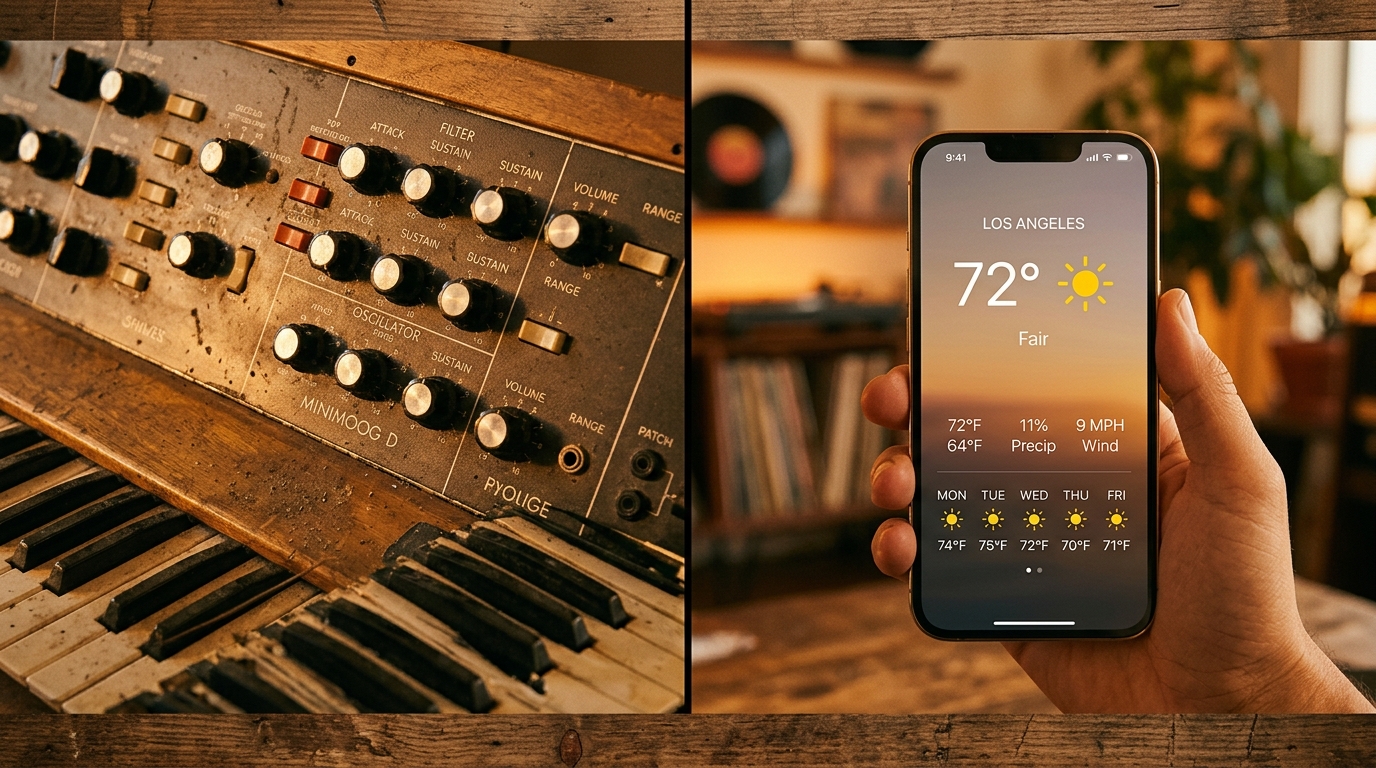
Midjourney is the master of the aesthetic. It understands light, material, and depth in a way that feels almost tactile. If you are in the early stages of a project and need to define the 'look and feel', Midjourney is your tool. It excels at creating 'vibe' shots, hero illustrations, and textured backgrounds. The friction here is the interface. Working in Discord feels like a seam that hasn't been smoothed over yet. You have to learn the language of parameters like --ar for aspect ratio and --stylize to control how much the AI takes over your vision.
DALL-E 3, on the other hand, lives inside a chat box. Its primary affordance is conversation. It is much better at following complex instructions, especially when it comes to the arrangement of elements. If you need a landing page mockup with a specific number of buttons and a clear hero section, DALL-E 3 will get closer on the first try. It understands the mental model of a 'user interface' better than Midjourney does.
| Feature | Midjourney v6 | DALL-E 3 |
|---|---|---|
| UI/UX Layouts | Average | Excellent |
| Text Rendering | Improved, but finicky | Great |
| Material & Texture | Industry leading | Average |
| Prompt Adherence | Requires specific keywords | High (Natural Language) |
| Ease of Use | Moderate (Discord based) | High (Chat based) |
Step 2: Prompting for structural legibility
Once you have picked your tool, the next step is to craft your prompt. In product design, we care about legibility. We want the AI to understand the hierarchy of the page.
When using Midjourney, I find it helpful to use photography metaphors. Think about the focal length and the lighting. For a mobile app concept, try a prompt like:
A clean mobile app interface for a minimalist meditation tool, soft claymorphism style, high end studio lighting, macro shot of a glass button, 8k resolution, --v 6.0 --ar 9:16
This tells the tool to focus on the materials. The 'claymorphism' and 'glass button' are specific textures that Midjourney handles beautifully.
When using DALL-E 3, you should describe the logic of the page. You can be more direct because the model uses a large language model to interpret your intent. Try this:
'Create a desktop dashboard for a project management tool. The sidebar should be dark charcoal. The main content area should have three cards showing project status. Include a clear search bar at the top and a circular profile icon in the top right corner. Use a modern sans-serif font.'
DALL-E will actually attempt to place those elements where you asked. This reduces the friction of the initial layout phase. If you are moving from a visual concept to a technical audit of your design, you might find our guide on Writing PRDs with AI: Moving from Content Generation to Technical Audit useful for keeping your documentation as sharp as your visuals.
Step 3: Integrating outputs into the team flow
An image is just an image until it enters the workflow. This is where many designers get stuck. They have a beautiful Midjourney render, but it is a flat file. It is a dead artifact.
To move forward, we have to break the image down into components. I like to use the AI generation as a reference point for my actual design work in Figma. I look for the 'affordances' the AI suggested. Did it put a shadow under a button that makes it feel clickable? Did it use a specific shade of blue that creates a sense of trust?
Once you have the visual direction, you can use other AI tools to speed up the implementation. For example, if you are building a landing page, you can use the Anthropic API to help generate the React components that match your AI-generated layout. Or, you can use GitHub Copilot inside your IDE to write the CSS that replicates the gradients you saw in your Midjourney export.
If your project involves a lot of copy, you might also bring in Surfer SEO to ensure your content design is as optimized as your visual design. The goal is to keep the flow state going. You don't want to stop and manually calculate every hex code if an AI can help you bridge that seam.
If you are still in the early stages of a project, you can even Validate a SaaS Idea Using AI Without Losing Your Shirt by using these images in a quick landing page test. Seeing how real users interact with a 'fake' but high fidelity image can save months of wasted development time.
Troubleshooting the friction points
No AI workflow is without its rough edges. Here are a few common issues I see designers face when using these tools:
- The 'Uncanny Valley' of UI: Sometimes Midjourney creates buttons that look like they are melting or text that looks like an alien language. If this happens, increase your
--noparameters. Use--no text, blurry, distortedto clean up the artifact. - DALL-E 3 is too 'safe': DALL-E has very strict filters. If you are designing something that even remotely touches on sensitive topics, it might refuse. In these cases, switching to a local instance of Stable Diffusion or using the Groq API with an open model can give you more freedom.
- Loss of Flow State: Spending three hours 'prompt engineering' is a trap. If you don't get a usable result in five attempts, stop. Use the closest image as a reference and move back to your primary design tool. The AI should reduce friction, not become the friction.
- Aspect Ratio Issues: Midjourney defaults to a square. Always remember to add
--ar 16:9or--ar 3:2for web design mockups. DALL-E 3 allows you to specify 'wide' or 'tall' in your natural language prompt.
Next steps for your design workflow
The best way to understand these tools is to use them in a live project. I suggest a simple test to find your own preference. Take a small component, like a pricing card or a login screen, and try to generate it in both tools using the same core description.
Notice which one feels more like an extension of your hand. Does the Discord interface of Midjourney feel like a hurdle, or do you enjoy the granular control? Does the chatty nature of DALL-E 3 feel helpful, or does it feel like you are talking to a middleman who doesn't quite get the nuances of 'white space'?
As you move your designs into production, remember that the AI is just a partner. It provides the raw material, but the craft comes from you. You are the one who decides where the seams should be hidden and where they should be celebrated. For more on how to manage the transition from design to code, check out our post on the Best AI code review tools: A post-mortem of our failed automation to see how we handled the technical side of the AI seam.
Keep observing the small things. The way a shadow falls. The way a button feels. Those are the things that make a product feel real, no matter which tool you used to dream it up.