
42 percent. That is the drop in average user activation I saw across three portfolio companies that tried to deploy five or more AI tools simultaneously last quarter. AI tool fatigue is not a psychological condition. It is a budget leak. When you force a marketing team to use six different interfaces to do one job, your unit economics fall apart. You are not just paying for the seats. You are paying for the context switching, the fractured data, and the inevitable churn when the team realizes that GPT-4 behaves differently in every single one of those wrappers.
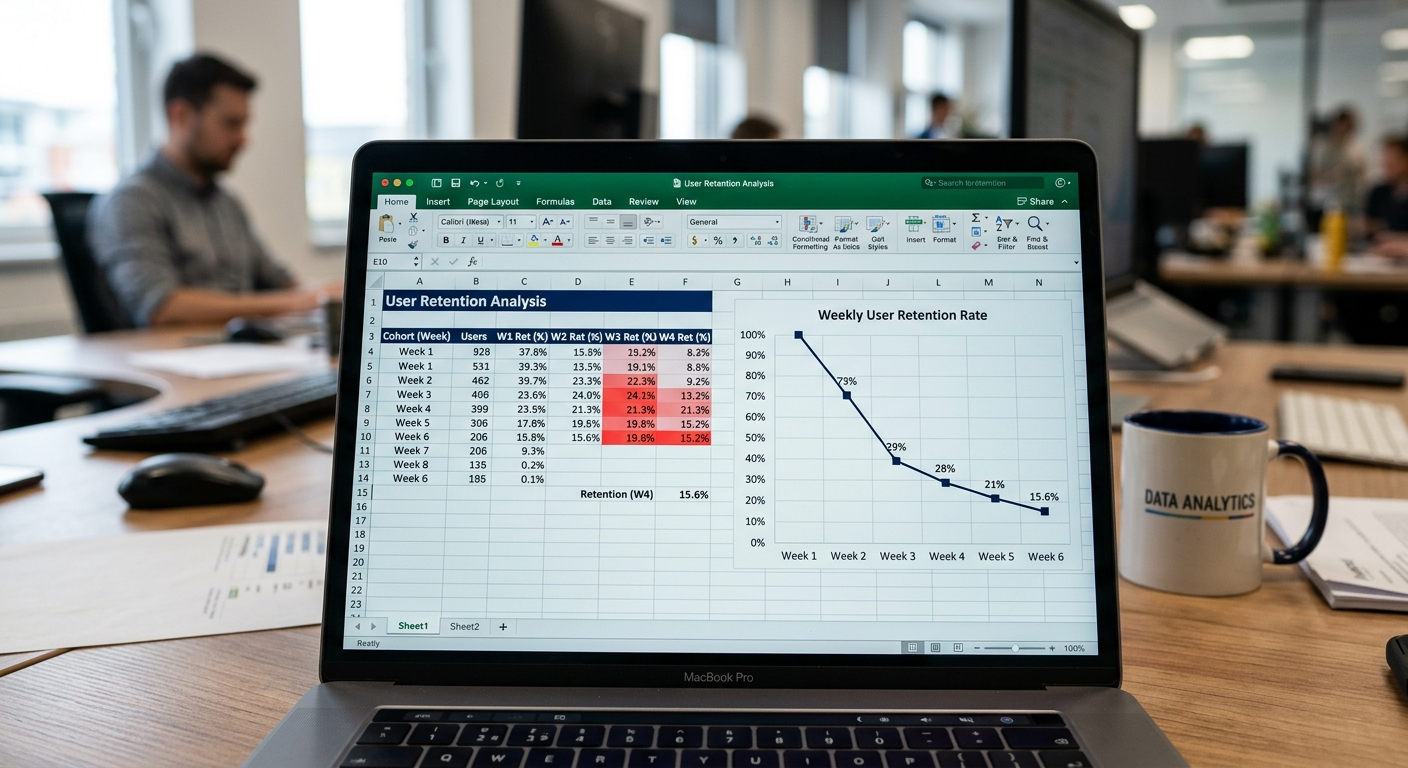
I recently audited a Series A startup spending $14,000 a month on SaaS. Nearly $3,000 of that was going to AI point solutions. When we looked at the cohort data, the retention curve for these tools looked like a cliff. People signed up, generated one funny image or a mediocre blog post, and never logged back in. Yet the subscriptions kept running. This is the reality of the current market. We are over-tooling and under-executing.
The short answer
AI tool fatigue happens because most tools solve for a feature, not a workflow. To fix it, you need to stop buying wrappers and start building a stack that prioritizes high activation and low CAC. The solution is consolidation. You need one general assistant for research, one specialized tool for your core revenue driver, and one infrastructure layer for your custom builds. If a tool does not show a clear payback period through reduced headcount or increased output within 30 days, kill the subscription.
Consolidation reduces the mental load on your team. It also allows for better data flow. Using something like OpenRouter to centralize your API calls is often better than paying for twenty individual seats of a tool that just calls the same models. You want your team focused on the funnel, not on managing twenty different passwords for twenty different chat interfaces.
How they differ
Not all AI is created equal. I categorize the current market into four buckets based on their impact on your P&L.
First, you have General Assistants like Grok. These are for real-time data and general research. Grok has an advantage because of its integration with X. If your business relies on being first to market with news or trends, the real-time data feed justifies the seat. If you are just using it to write emails, you are wasting money.
Second, you have Creative Suites like Canva AI and Midjourney. These tools have high activation because they produce a visible asset. However, the fatigue here sets in when you have too many options. I have seen teams use Midjourney for raw assets and then move to Canva for the layout. This works because the hand-off is clear. The fatigue happens when you add a third or fourth tool that does the exact same thing.
Third, you have Vertical AI like Selzee. These are different. Selzee is an AI ecommerce manager that sits in Slack and monitors Shopify sales, ads, and inventory. This is a workflow tool. It does not require a new tab. It pushes data to where you already are. This is the antidote to fatigue. It reduces the work instead of adding another dashboard to check. You can see how this affects your First 100 users AI workflow by looking at how automated alerts speed up the feedback loop.
Finally, there is Infrastructure. If you are building your own tools, stop using individual API keys for every provider. OpenRouter gives you one gateway to 100+ models. This is how you manage costs. You can swap a high-cost model like GPT-4o for a cheaper one like Claude 3 Haiku without rewriting your entire backend. This is how you protect your MRR.
Head-to-head table
| Category | Example Tool | Pricing Model | Activation Metric | Fatigue Risk |
|---|---|---|---|---|
| General Assistant | Grok | $16/mo (X Premium+) | Queries per day | High (Overlapping features) |
| Creative Suite | Canva AI | $120/yr per user | Designs exported | Medium (Workflow heavy) |
| Vertical AI | Selzee | $49+/mo | Alerts triggered | Low (Passive value) |
| Infrastructure | OpenRouter | Usage-based | API calls | Zero (Backend utility) |
When to pick each
You should pick a General Assistant when your team spends more than two hours a day on research or competitive analysis. Grok is particularly useful if your niche is active on X. The ROI here is time saved on search. If you are repurposing long form content with AI, a general assistant is your starting point for context extraction.
Pick a Creative Suite only if you have a high volume of visual output. If you are making one social post a week, do not buy a pro subscription to three different image generators. Pick one. Midjourney remains the leader for raw quality, but Canva AI is better for the average marketer who needs to ship a finished ad unit.
Pick Vertical AI like Selzee when you have a specific, high-stakes metric to track. If you are running a Shopify store, you do not want to be digging through Google Analytics and Facebook Ads Manager all day. You want an AI to tell you when your ROAS drops or your inventory is low. This is the only type of tool that actually cures fatigue because it removes the need to look at data manually.
Pick Infrastructure like OpenRouter if you are an engineer or a founder building internal tools. Managing multiple billing accounts for OpenAI, Anthropic, and Google is a nightmare.
// Example of how easy it is to switch models with OpenRouter
const response = await fetch("https://openrouter.ai/api/v1/chat/completions", {
 method: "POST",
 headers: {
 "Authorization": `Bearer ${OPENROUTER_API_KEY}`,
 "Content-Type": "application/json"
 },
 body: JSON.stringify({
 "model": "anthropic/claude-3-opus", // Easily swap this out
 "messages": [{"role": "user", "content": "Analyze my CAC."}]
 })
});
Verdict
The verdict is simple. Your stack is likely bloated by 30 percent. If you want to eliminate AI tool fatigue, follow the rule of one. One assistant, one creative platform, and one specialized vertical tool for your primary business model.
For most ecommerce founders, the winning combo is Grok for research, Canva AI for creative, and Selzee for operations. This keeps your team out of the 'new tab' hell and focused on the metrics that matter. Stop looking for the next shiny wrapper. Look at your OpenAI Pricing or Anthropic Pricing bills and realize that most of what you are paying for could be consolidated into a single workflow.
Measure your activation. If the team is not using the tool daily, it is not a tool. It is a donation to a developer in San Francisco. Cut the dead weight and focus on the unit economics. Your bank account will thank you.