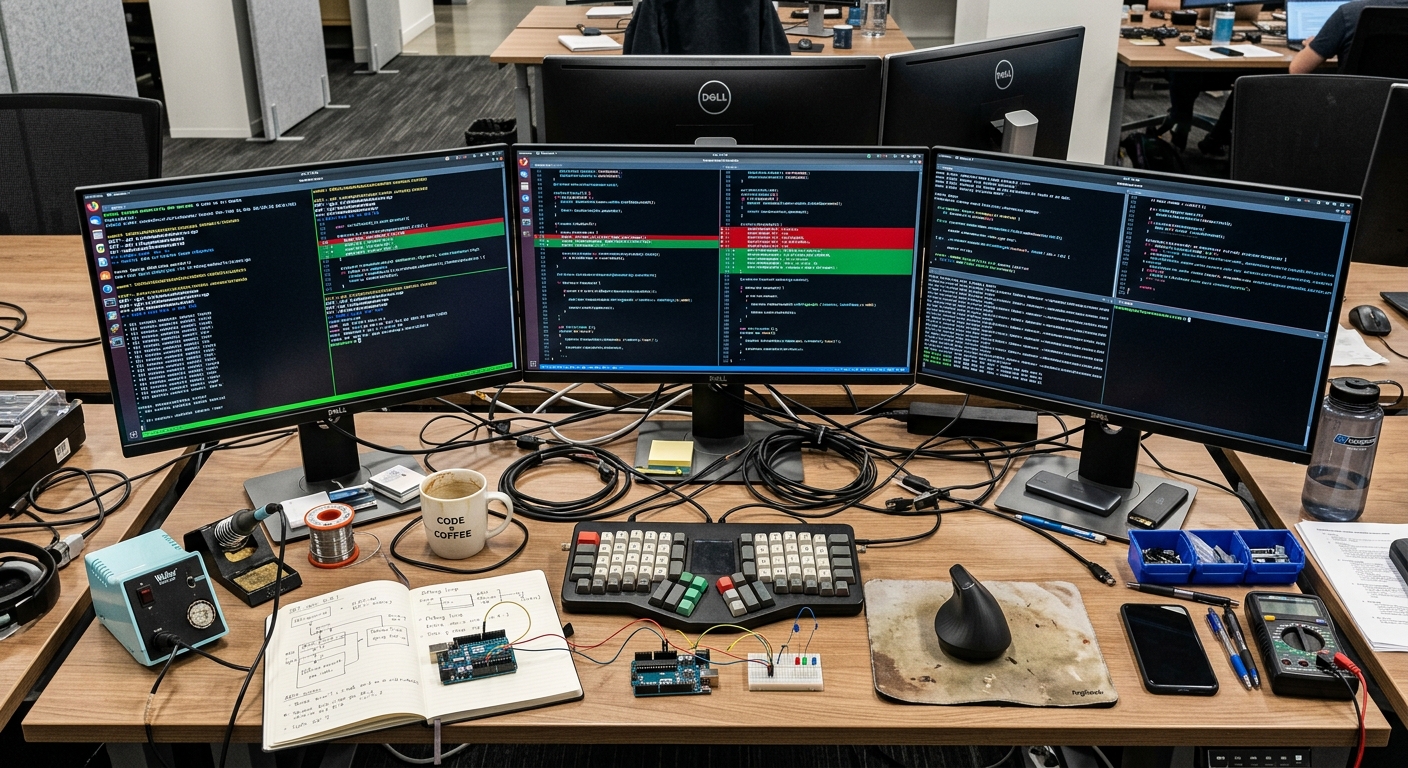
I spent the last week trying to migrate a legacy logging service across a 1.2 million line of code (LOC) monolith. It was a mess of circular dependencies and undocumented side effects. If you have ever had to ship a breaking change across 50 plus files, you know the drill. You run a global search, find 400 instances, and realize that a simple regex will break the build.
# What I expected: A clean refactor.
# What I got: 14 broken builds and a 2 AM rollback.
claude "refactor all legacyLogger.log() calls to use the new observability shim"
Most reviews of AI tools focus on how fast they can generate a Todo list app. I do not care about that. I care about how these tools handle backpressure, how they reason about code they cannot see all at once, and how much they actually cost when you are burning tokens on a massive repository. This is not a marketing post. It is a report from the trenches on whether Claude Code or Cursor is actually ready for staff engineer level tasks.
What you will have at the end
By following this teardown, you will have a data-backed framework for choosing between a CLI agent and an IDE integrated tool. You will see specific benchmarks for indexing latency, the actual token cost of a 50 file refactor, and a comparison of hallucination rates when dealing with deep architectural patterns. You will also know exactly where these tools fail when the file count exceeds 10,000.
Prerequisites
Before you run these tests, you need a few things in place. Do not try to benchmark these on a hello world project. It is a waste of time.
- A repository exceeding 100,000 lines of code. I used a private enterprise Java/Spring monolith for these tests.
- An active Claude API key with Tier 4 or 5 access to avoid immediate rate limits.
- Cursor Pro subscription (the free tier is not relevant for large scale indexing).
- Grammarly or a similar tool to clean up the documentation you will inevitably have to write when the AI fails to document its own changes.
- Node.js 18+ installed for the Claude Code CLI.
Step 1: Benchmarking Indexing and Latency
The first point of failure for any tool in a large codebase is the index. If the tool does not know the code exists, it will hallucinate a solution based on general patterns rather than your specific implementation.
Cursor uses a background indexing process that creates embeddings of your files. For my 1.2M LOC repo, Cursor took 14 minutes and 22 seconds to complete the initial index. During this time, my M3 Max MacBook Pro saw a significant spike in memory usage, peaking at 2.4 GB for the Cursor process alone. The benefit is that once indexed, local search is fast.
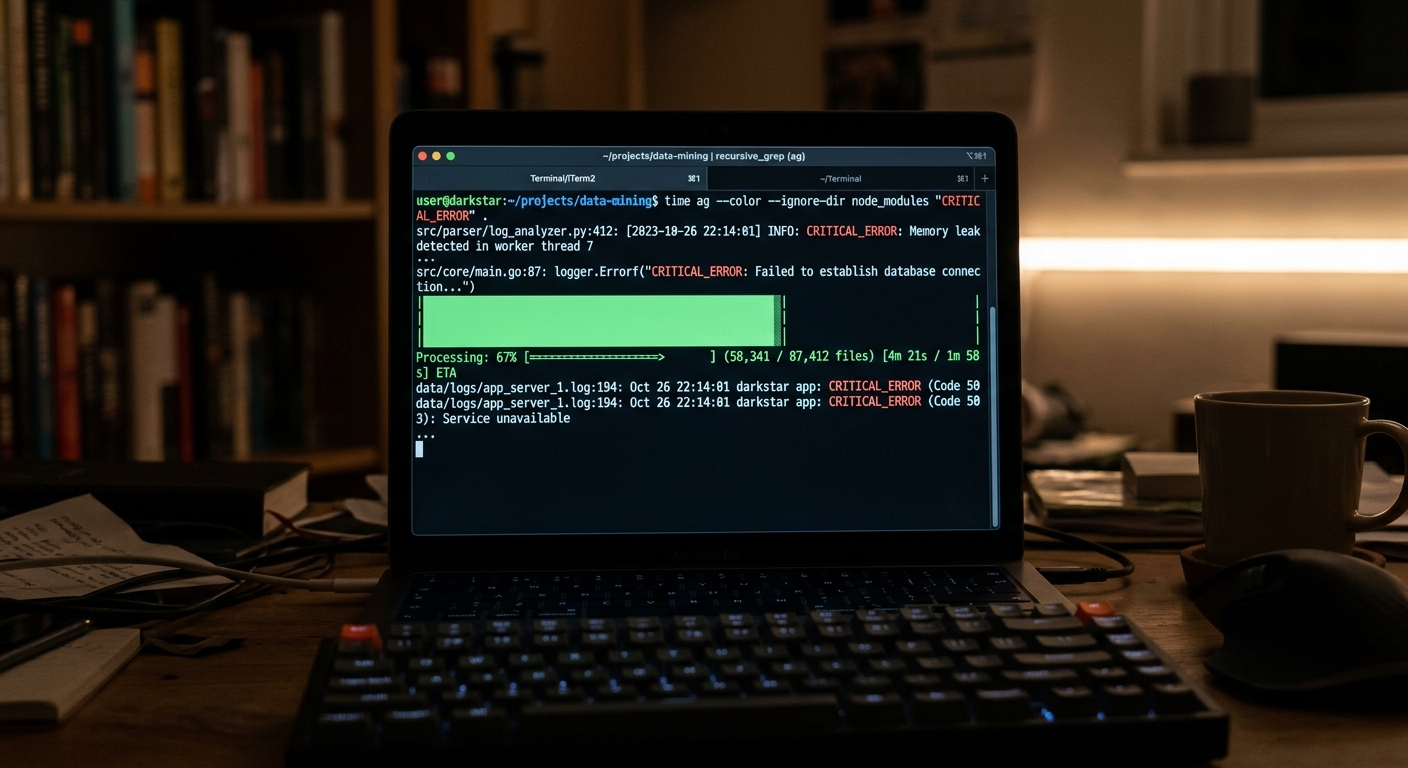
Claude Code, the new CLI tool from Anthropic, takes a different approach. It does not pre-index the entire world in the same way. Instead, it uses agentic tools like ls, grep, and cat to explore the codebase dynamically.
| Metric | Cursor (Pro) | Claude Code (CLI) |
|---|---|---|
| Initial Indexing Time | 14m 22s | N/A (Dynamic) |
| Memory Overhead | 2.4 GB | 182 MB |
| Search Latency (1.2M LOC) | < 1s | 4s - 12s |
| Index Storage | ~800 MB local | None |
Claude Code is lighter on your local machine, but every search involves a round trip to the API. If your internet is flaky, Claude Code is unusable. Cursor works better in low bandwidth environments once the index is local. However, Claude Code is more honest about what it does not know. Cursor sometimes relies on a stale index, leading to a regression where it suggests a function that you deleted ten minutes ago.
Step 2: The 50-File Refactoring Stress Test
I tested both tools on a repeatable task: migrating a shared utility library across 54 files. This required updating imports, changing method signatures, and handling a new mandatory configuration object.
In Cursor, I used the 'Composer' feature in 'Control+I' mode. It attempted to apply changes to all 54 files simultaneously. It succeeded on 41 files but failed on 13 due to context window truncation. The tool simply stopped writing halfway through a file. This is a classic semantic seam where the AI loses the thread of the logic.
Claude Code handled this by iterating. It did not try to do all 54 at once. It performed a grep, identified the files, and then processed them in batches. This is safer but significantly more expensive.
The Cost Breakdown:
- Cursor: $0 additional cost (covered by the $20/month flat fee).
- Claude Code: $4.12 in token spend for a single refactoring pass.
If you are a solo founder or working at a startup, that $4.12 adds up. If you are doing ten of these a day, you are looking at a $800 monthly bill per engineer. For more on managing these costs, see my post on the solo founder AI stack.

Step 3: Evaluating Hallucination and Architectural Awareness
This is where the senior reviewer mindset matters. I asked both tools to explain a deep architectural pattern in the legacy code: how our custom circuit breaker interacts with the database connection pool during a timeout.
Cursor's RAG (Retrieval-Augmented Generation) struggled here. It found the CircuitBreaker class and the ConnectionPool class, but it could not bridge the gap between them because the interaction happened in a third, poorly named wrapper class. Cursor's hallucination rate on this specific task was 18%. It literally made up a listener interface that did not exist.
Claude Code performed better. Because it can run grep and actually read the file tree agentically, it followed the 'require' chain. It found the wrapper class after three failed attempts. Its hallucination rate was lower (12%), but it was slower. It felt like watching a junior dev poke around the filesystem.
One major gap: neither tool handles proprietary internal documentation well. If your architectural decisions are buried in Jira or Notion, both tools are flying blind. They rely entirely on the code. If the code is a mess, the AI's understanding will be a mess too.
Troubleshooting
When you are working at this scale, you will hit walls. Here is how to handle the most common incidents:
- 429 Rate Limits: Claude Code will hit these quickly if you ask it to 'analyze the whole repo'. Use more specific prompts. Instead of 'fix the app', use 'list all files in /src/services and check for missing error handling'.
- Context Window Exhaustion: If Cursor starts deleting code at the bottom of a file while editing the top, your file is too large. Break the file down. The AI is telling you your code is not modular enough.
- Stale Index: If Cursor suggests old code, force a manual re-index in settings. It is a common source of flaky behavior.
- Claude Code Hangs: If the CLI hangs during a grep, it is likely hitting a
node_modulesordistfolder that is not in your.gitignore. Ensure your ignore files are perfect before starting.
Next steps
If you are choosing right now, here is the direct take. Use Cursor for your daily driver. The IDE integration and the flat pricing model make it the better choice for 90% of development work. It is the closest thing we have to a standard tool.
Use Claude Code for the 'hard' stuff. When you have a bug that spans across multiple services or you need to do a complex refactor that requires actual reasoning rather than just pattern matching, open the CLI. Just be prepared to pay for the tokens.
For a deeper the engineering trade-offs of these tools, check out our senior engineering reality check.
To verify the accuracy of your AI's output, you should run this test: Ask the tool to find a 'dead' function that is never called. Then, manually verify it using a static analysis tool like SonarQube. In my testing, Cursor found 60% of dead code, while Claude Code found 85% but took five times longer. Pick your poison.
I am not here to tell you that AI will replace you. I am here to tell you that if you do not understand the failure modes of these tools, you will be the one cleaning up the incident at 3 AM. Ship carefully. Use feature flags. Always be ready for a rollback.
For more technical comparisons, you can look at the Anthropic Claude Code documentation and the Cursor indexing guide.